Zafra Trading Co. seal

Zafra Trading Co.

Puerto Rican Agriculture, Worldwide

De la cosecha al mundo — From the harvest to the world

San Juan, Puerto Rico

What Is Zafra?

Zafra is the Spanish word for harvest season — the time when coffee cherries, cacao pods, honey, and vanilla beans are brought down from the mountains. It carries the weight of an entire agricultural year: the labor, the waiting, and finally, the gathering.

Zafra Trading Co. is the international distribution arm for Puerto Rican specialty agriculture. We source directly from farmer-owned cooperatives in Puerto Rico's central highlands — Yauco, Jayuya, Adjuntas, Maricao, Castañer, Aibonito — and bring their harvest to markets that value what the island produces.

We are not a middleman. We are the bridge. The co-op owns its processing. The farmers set their price. Zafra carries it to the world — and the world pays what quality deserves.

Direct trade. Farmers receive above-market pricing — not commodity floor rates. Price transparency is the foundation. Every buyer knows what the farmer was paid.

What We Carry

Puerto Rico grows some of the world's most distinctive agricultural products — island-grown, mountain-shaded, hand-harvested. Limited production, not commodity volume. Four products, each with its own story.

Ripe coffee cherries on the branch

Coffee

100% Puerto Rican Arabica. Bourbon, Typica, Caturra, and USDA-TARS rust-resistant hybrids (Limaní, Obatá, Marsellesa). Washed process. Regions: Yauco, Jayuya, Adjuntas, Maricao. SCA 82-88. Roasted to spec or green.

Cacao pods split open showing beans

Cacao

Heritage Puerto Rican Trinitario — a Criollo-Forastero hybrid with deep Caribbean roots. Fermented and sun-dried to spec. Single-origin beans for chocolate makers and craft processors.

Golden honey being drizzled into a jar

Honey

Mountain wildflower and coffee-blossom honey from PR's Cordillera Central. Raw, unfiltered, single-apiary. PR's Africanized bees are mite-resistant — no Varroa treatments needed. Island isolation means certified organic potential.

Vanilla orchid flowers and cured pods

Vanilla

Puerto Rican vanilla — one of the rarest vanillas in the world. USDA-TARS introduced commercial varieties in 1909. A 1946 cooperative unified curing and grading. Now being revived by a new generation. Cured and graded to export spec.

The Four Harvests

Each product has its own history, its own biology, its own reason for being rare. Here are the stories behind what we carry.

Coffee · Yauco · Jayuya · Adjuntas · Maricao

Coffee

Coffee was Puerto Rico's #1 export from the 1860s through the 1890s. The island's central highlands produce some of the rarest Arabica in the world — grown at 400-1,000m altitude, hand-picked, washed processed.

Hurricane Maria (2017) devastated 80% of the island's coffee trees. Recovery is ongoing. Limited production keeps PR coffee among the most exclusive origins on the market — the island produces roughly 36,000 quintales but consumes 200,000. The gap is filled by imports. That scarcity is the value.

$25/almud (28 lbs cherry) — what our cooperatives pay farmers. Government floor: $18. Market rate: $20. Direct trade, price transparency, above-market pay.
Cacao · Heritage Trinitario · Criollo-Forastero Hybrid

Cacao

Puerto Rican cacao is heritage Trinitario — the same Caribbean variety that chocolate makers prize from Trinidad, Venezuela, and Madagascar. Trinitario is a natural hybrid of Criollo (the rarest, most aromatic cacao) and Forastero (the hardier, higher-yielding type).

PR's trees are descendants of Spanish colonial introductions, isolated on the island for generations. This is not commodity bulk — it's fine-flavor, single-origin, fermented to spec. Chocolate makers who want a Caribbean origin with a story find it here.

The Raíces Vivas program at Fundación Areito works on cacao genetics, fermentation protocols, and quality training with partner farms.
Honey · Cordillera Central · Africanized Bees

The Bee Story

Puerto Rico's honey is a product most people don't know exists — and it's among the best-positioned honeys in the Western Hemisphere. The story starts with the bees.

In 1994, Africanized honey bees arrived in Puerto Rico. On the mainland, Africanized bees are feared — aggressive, hard to manage. But on the island, something unexpected happened. The population developed a rare trait: natural resistance to Varroa mites, the parasite that has been devastating honey bee colonies worldwide. No miticide treatments. No chemical exposure. The bees are also notably gentle — their defensiveness bred out over generations of island isolation.

Island isolation means something else too: PR honey can be certified organic. Bees on the mainland can't be certified, because they forage across property lines where pesticides are used. In Puerto Rico, there's nowhere for bees to reach contaminated fields. Mountain wildflower, coffee blossom, sierra palm — each apiary produces a distinct terroir honey.

The Polinizadores program at Fundación Areito runs queen bee breeding and pollinator health initiatives alongside honey production — pollinator health as a mission, not a byproduct.
Vanilla · Castañer · USDA-TARS · Since 1909

Vanilla

Puerto Rico was once a vanilla production center. The USDA's Federal Experiment Station (now TARS) in Mayagüez introduced commercial vanilla varieties in 1909. By the 1930s, the station was a major research center for vanilla propagation, pollination, and curing.

A 1946 cooperative — the Cooperativa de Cosecheros de Vainilla de Puerto Rico — unified curing, grading, and packing. Then Operation Bootstrap pulled the island toward industry and vanilla faded.

Now it's coming back. The Cooperativa de Vainilla de Puerto Rico, founded in 2023 with 35 members, is reviving the tradition. A new generation of farmers, new disease-resistant varieties, and the same mountain conditions that made PR vanilla distinctive in the first place. Zafra is their channel to the international market — where vanilla is the second most expensive spice in the world, and PR-grown is nearly unheard of.

The Products

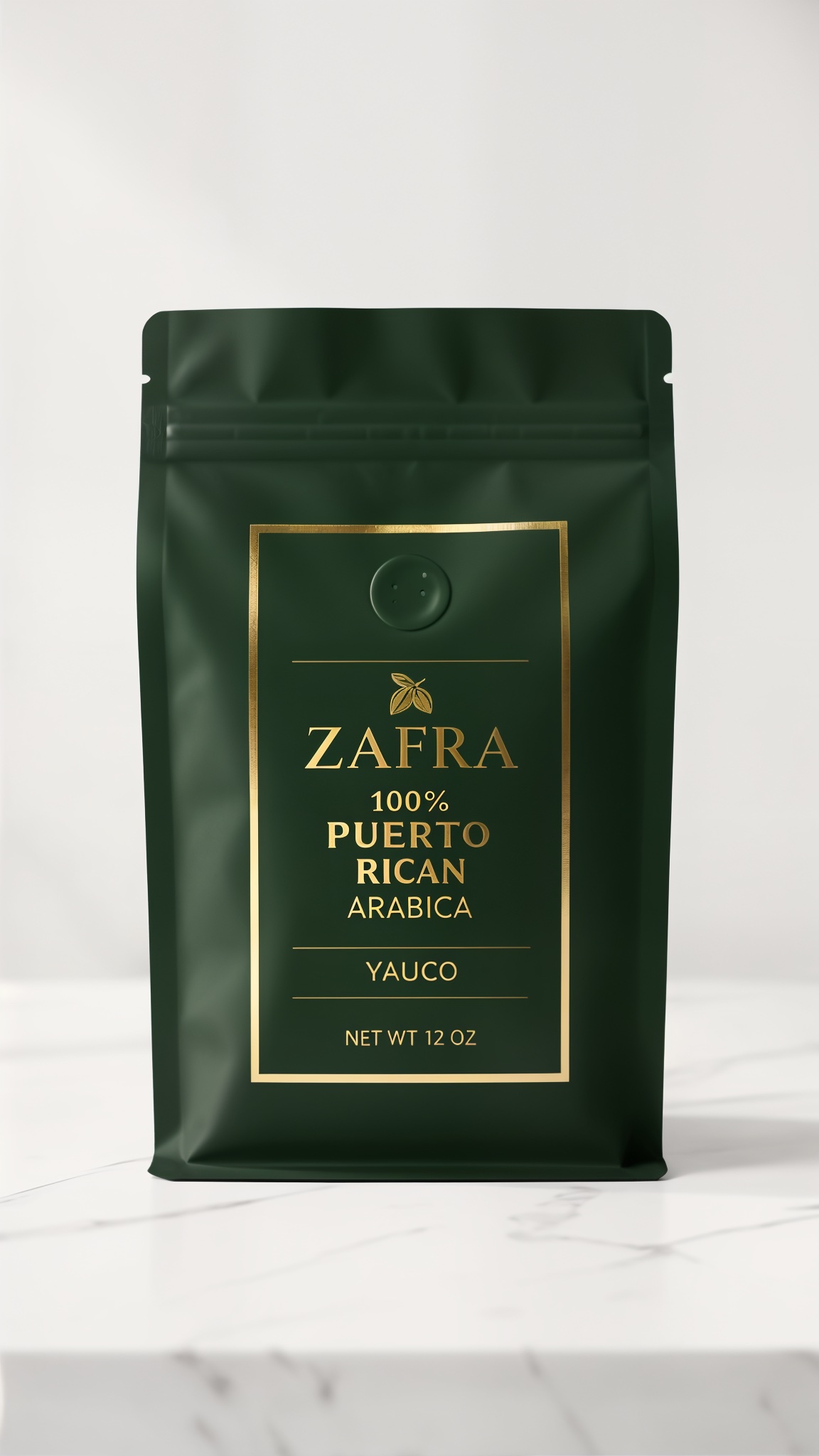
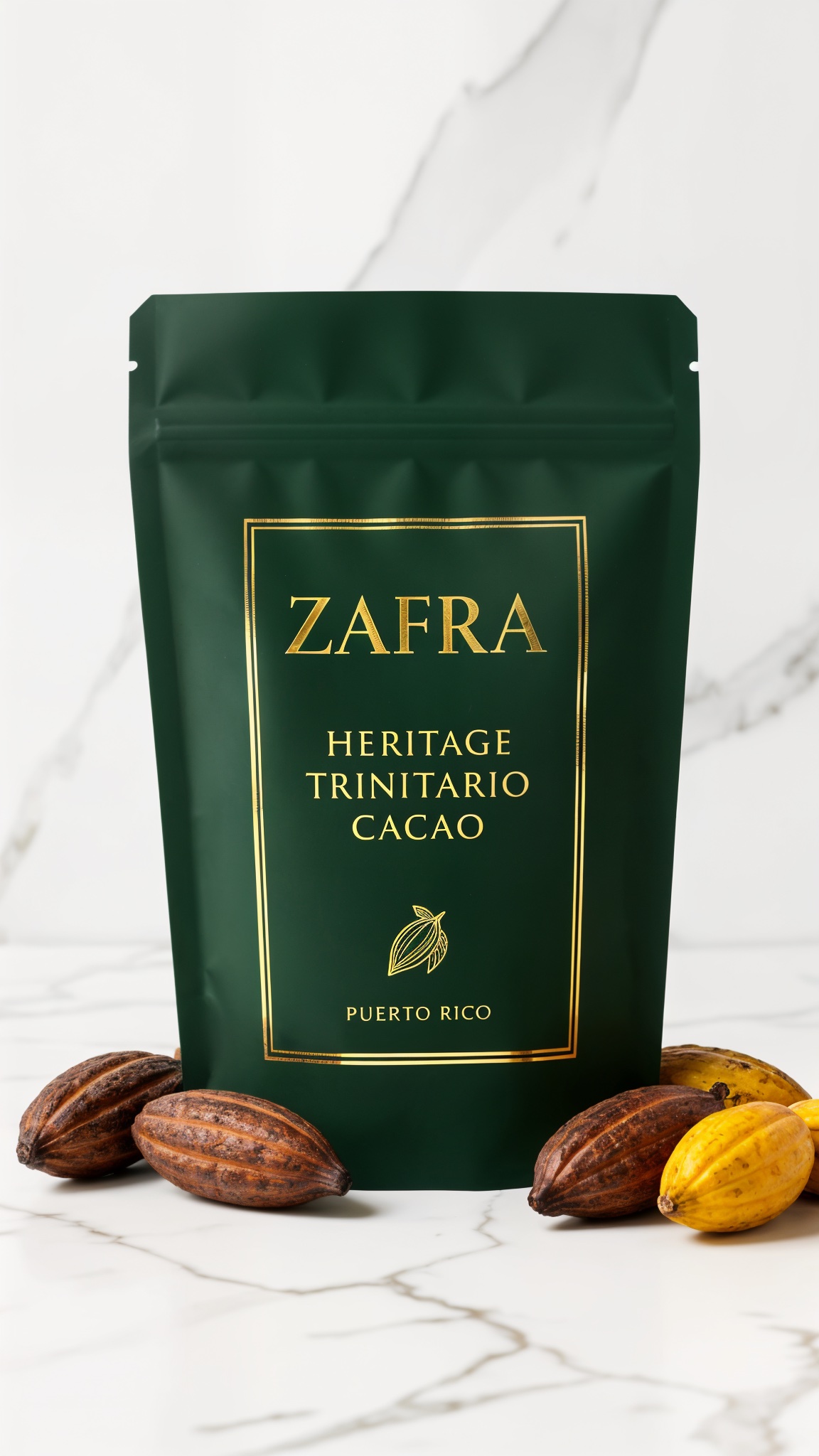
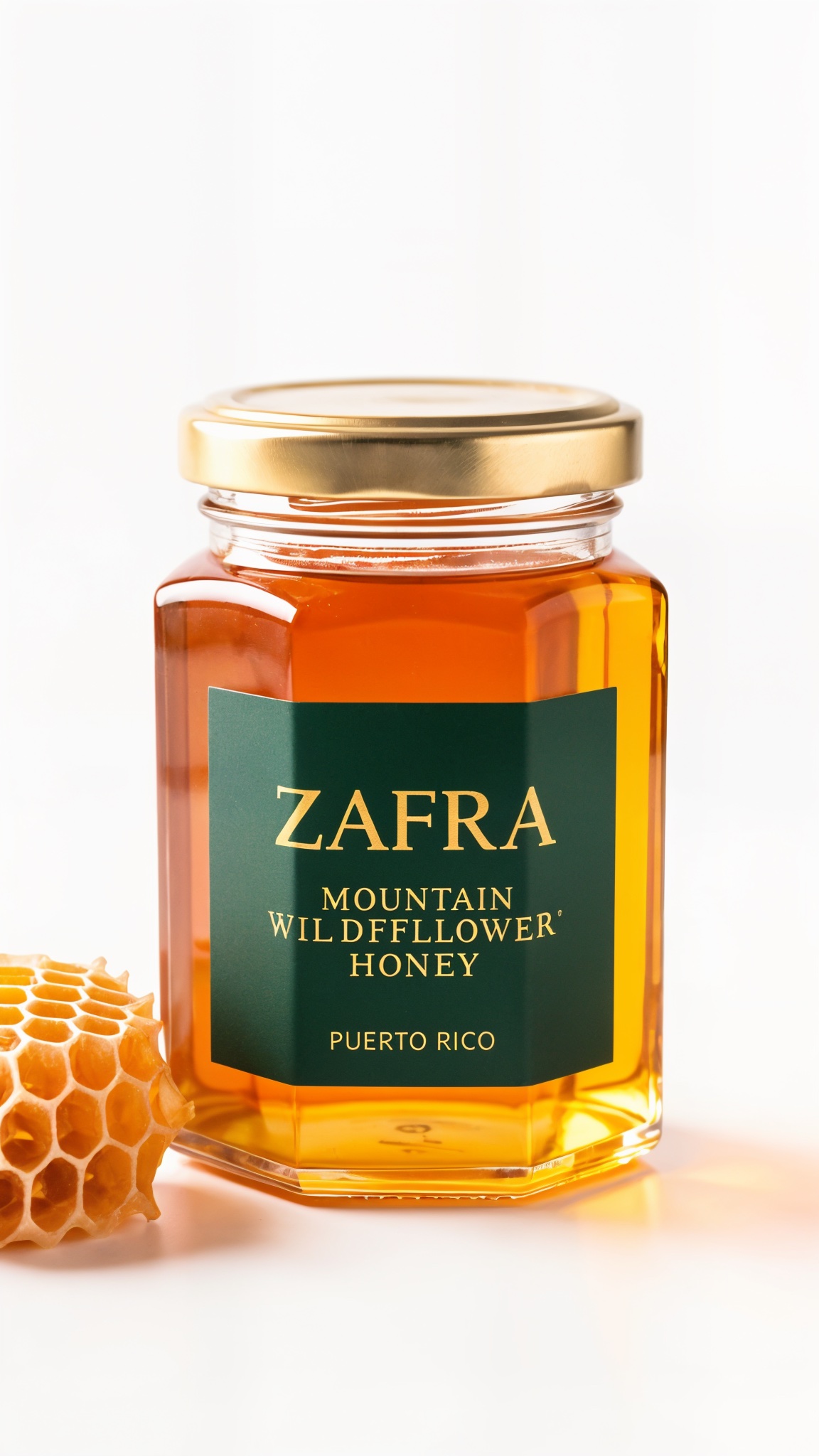
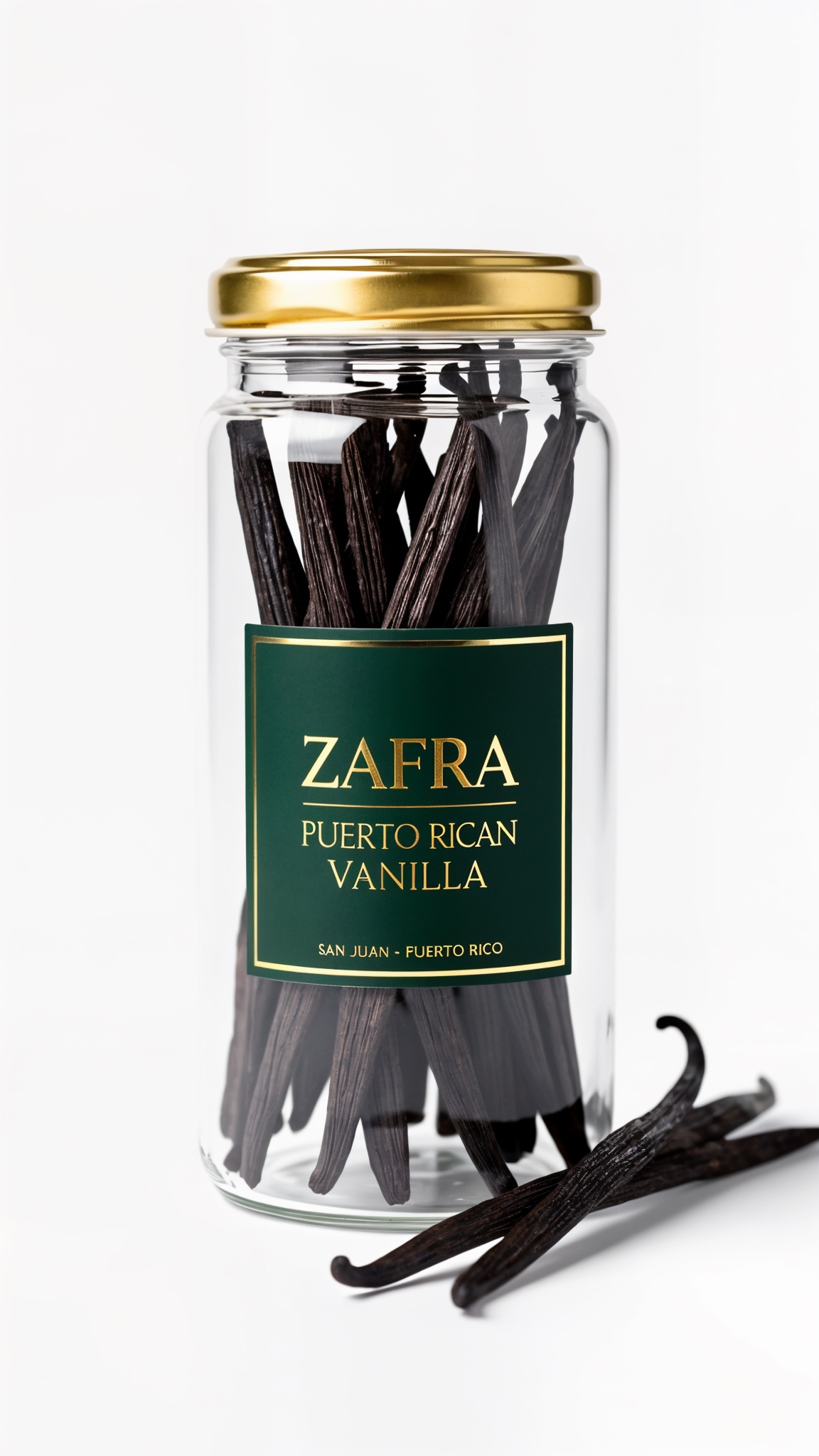
Every product carries the same mark — gold on green, the Zafra seal. One brand, four harvests, instantly recognizable on a shelf.

Zafra coffee bag

Coffee — 12oz Bag

Zafra pour-over coffee

Single-Serve Pour-Over

Zafra honey jar

Mountain Wildflower Honey

Zafra vanilla jar

Puerto Rican Vanilla

Zafra cacao bag

Heritage Trinitario Cacao

How It Works

The model is simple and transparent. Three independent entities, each doing one thing well:

1
Farmers

Grow, harvest, and deliver to the co-op at above-market prices.

2
Cooperative

Processes, grades, and packages. Co-op owns the equipment. Farmers own the co-op.

3
Zafra

Buys from the co-op. Ships to international buyers. Carries the story.

Price Transparency

Every shipment carries a provenance card: region, farm or co-op, harvest date, processing method, and the price paid to the farmer. Buyers know the story. Farmers know their product is respected. That's the moat.

The Ecosystem

Zafra Trading Co. is the distribution layer of a three-entity agricultural platform built in Puerto Rico:

  • Fundación Areito de Puerto Rico — Non-profit umbrella. Programs: Instituto de Café (coffee education and quality), Polinizadores (pollinator science and beekeeping), Raíces Vivas (cacao genetics and fermentation), Propagación (tissue culture and nursery). Funds the infrastructure. Does not sell product.
  • Areito Cooperative — Farmer-owned. Owns processing equipment (grant-funded through the Foundation). Processes coffee, cacao, honey. Retains on-island distribution. Sells to Zafra for international export.
  • Zafra Trading Co. — International distribution. Buys from the co-op. Ships to US and international markets. B2B wholesale and consumer-facing retail.

These are independent entities with different owners. The cooperative is farmer-owned. The foundation is an independent non-profit. Zafra is the commercial arm.

Why Puerto Rico

Puerto Rico was once one of the world's great coffee origins. In the 1860s through 1890s, coffee was the island's #1 export. Then came industrialization, then Hurricane Maria (2017), which devastated 80% of the island's coffee trees.

Today, PR produces roughly 36,000 quintales of coffee a year but consumes 200,000. The gap is filled by imports. Domestic production is limited — and that limitation is also the value. PR coffee is among the rarest in the world. Island-grown, mountain-shaded, hand-picked.

The same story holds across the portfolio: PR cacao is heritage Trinitario, not commodity bulk. PR honey comes from mountain wildflowers in one of the most biodiverse islands in the Caribbean. PR vanilla is being revived by a cooperative that believes in it.

Zafra exists because these products deserve a channel that pays what they're worth — not what the commodity floor dictates.

Let's Talk

Are you a buyer?

If you source specialty coffee, cacao, honey, or vanilla — and you care about where it comes from and what the farmer was paid — let's talk.

We work with wholesale buyers, roasters, chocolate makers, retailers, and distributors across the US and internationally.

Get in Touch
Contact

Email: hello@zafratrading.com
Location: San Juan, Puerto Rico
Web: zafratrading.com